If you’ve been researching ways to start an online business, you’ve probably come across the term “dropshipping” more than a few times. Maybe an ad promised you could make thousands while working from your laptop. Maybe a friend mentioned it. Either way, you’re here because you want to know: what is dropshipping, really?
I’m going to give you a straight answer—no hype, no get-rich-quick nonsense.
After 14 years in ecommerce and helping build over 800 online stores, I’ve seen dropshipping work beautifully for some people and fail completely for others. The difference usually comes down to understanding what you’re actually getting into.
Let me break it down for you.
What is Dropshipping? The Simple Explanation
So, what is dropshipping in practical terms? Here’s the easiest way to think about it:
You’re the storefront. Your supplier is the warehouse.
When you run a traditional online store, you buy products in bulk, store them somewhere (your garage, a warehouse, under your bed), and ship them out yourself when orders come in.
With dropshipping, you skip all of that.
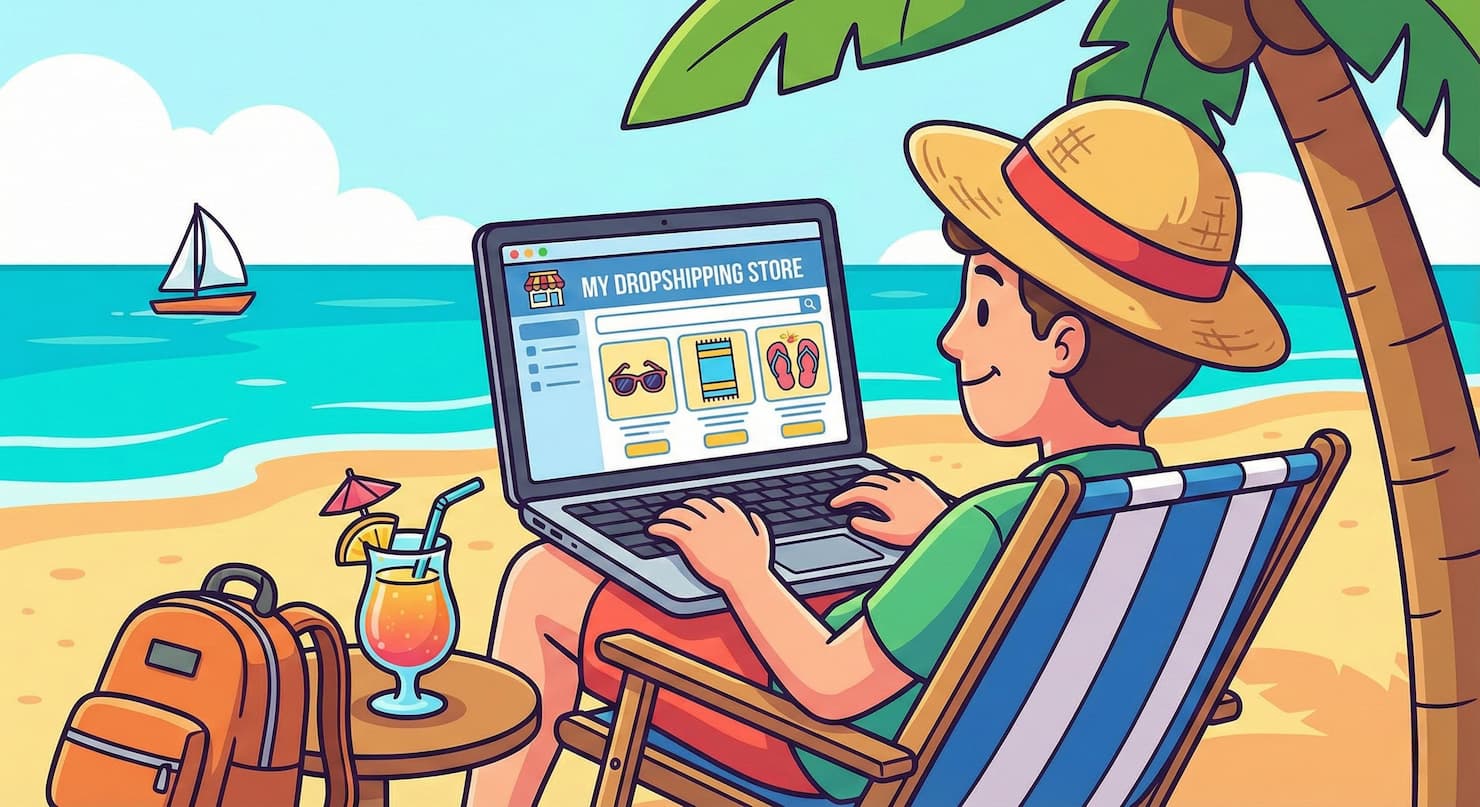
You set up an online store and list products for sale. When a customer places an order, you forward that order to your supplier. The supplier then ships the product directly to your customer. You never touch the inventory.
Your profit is the difference between what your customer paid you and what you paid the supplier.
That’s it. That’s dropshipping.
How Dropshipping Actually Works (Step by Step)
Let me walk you through a real example so this clicks.
Step 1: You create a Shopify store selling phone accessories. You find a supplier who sells phone cases for $5 each.
Step 2: You list those phone cases on your store for $19.99.
Step 3: A customer visits your store and buys a phone case. They pay you $19.99.
Step 4: You go to your supplier’s platform and order that same phone case for $5. You enter your customer’s shipping address instead of your own.
Step 5: The supplier ships the phone case directly to your customer.
Step 6: You keep the difference: $19.99 – $5 = $14.99 gross profit (minus any transaction fees and advertising costs).
Most of this process can be automated with apps that connect your store to suppliers. When an order comes in, it gets forwarded automatically. You don’t have to manually place each order.
Why People Choose Dropshipping
There are real reasons why this model appeals to so many beginners. Let me be honest about the genuine advantages.
Low Startup Costs
This is the big one. Starting a traditional retail business might require $10,000 or more in inventory alone. With dropshipping, you can launch a store with a few hundred dollars.
You’re not buying products until after you’ve already sold them. That eliminates most of the upfront financial risk.
No Inventory Management
You don’t need a spare room full of boxes. You don’t need to count stock. You don’t need to worry about products sitting unsold for months.
Your supplier handles all of that.
Location Freedom
Since you’re not shipping packages yourself, you can run a dropshipping business from anywhere with an internet connection. Your kitchen table, a coffee shop, another country—it doesn’t matter.
Easy to Test Products
Want to see if a product sells before committing? With dropshipping, you can add products to your store, run some ads, and find out. If it doesn’t sell, you haven’t lost money on inventory that’s now collecting dust.
Scalability
When orders increase, you don’t suddenly need a bigger warehouse or more packing supplies. Your supplier absorbs most of that growth. You focus on marketing and customer service.
The Downsides You Need to Know
Here’s where I need to be real with you. Dropshipping has genuine disadvantages, and ignoring them is how people fail.
Lower Profit Margins
Because you’re not buying in bulk, your per-item costs are higher than traditional retail. Competition also pushes prices down. Typical margins range from 15-30%, and advertising costs can eat into that quickly.
You need volume to make serious money.
Less Control Over Quality
You never see the product before your customer does. If your supplier sends something defective or poorly made, your customer blames you—not the supplier.
Always order samples before selling anything. I can’t stress this enough.
Shipping Can Be Complicated
If you work with multiple suppliers, your customer might receive multiple packages for a single order. Shipping times can also be longer, especially if your supplier is overseas.
Customers today expect fast shipping. Managing those expectations is part of the job.
You’re the Middle Person for Problems
When something goes wrong—lost package, damaged item, wrong size—your customer contacts you. But you have to contact the supplier to fix it. You’re stuck in the middle, and resolving issues takes longer.
Good customer service becomes more complicated, not less.
Competition is Real
The low barrier to entry means lots of people try dropshipping. You’ll be competing against other stores selling identical products, sometimes at lower prices.
Winning requires differentiation: better branding, better marketing, better customer experience.
Is Dropshipping Worth It in 2025?
Let me give you the honest answer: it depends on your expectations and approach.
The global dropshipping market continues to grow—it’s now valued at over $400 billion. People are still building profitable businesses with this model. But it’s not the effortless money machine that some influencers promote.
Dropshipping works best when you:
- Treat it like a real business, not a get-rich-quick scheme
- Choose a niche you understand or are willing to learn
- Focus on building a brand, not just listing random products
- Invest time in marketing and customer relationships
- Start with realistic profit expectations
It doesn’t work well when you:
- Expect overnight success
- Compete purely on price
- Ignore product quality
- Neglect customer service
- Give up after the first month without sales
Dropshipping vs. Traditional Ecommerce: Quick Comparison
| Factor | Dropshipping | Traditional ecommerce |
| Startup cost | Low ($100-500) | Higher ($2,000+) |
| Inventory risk | None | Significant |
| Profit margins | Lower (15-30%) | Higher (40-60%) |
| Shipping control | Limited | Full control |
| Product quality control | Limited | Full control |
| Scalability | Easy | Requires infrastructure |
| Location flexibility | High | Depends on setup |
Neither model is universally better. It depends on your situation, capital, and goals.
What You Need to Start Dropshipping
If you’re seriously considering this, here’s what you’ll need:
An ecommerce platform: Shopify is the most popular choice for dropshipping because of its app ecosystem. WooCommerce and BigCommerce are alternatives.
A supplier or supplier platform: Options include AliExpress (the largest selection, longer shipping), Spocket (US/EU suppliers, faster shipping), and CJ Dropshipping (good balance of price and speed).
A niche: Don’t try to sell everything. Pick a focused category where you can build expertise and brand recognition.
A marketing plan: Traffic doesn’t appear magically. Plan for paid ads (Facebook, TikTok, Google), content marketing, or influencer partnerships.
Patience and realistic expectations: Most successful dropshippers didn’t profit in their first month. Or second. Give yourself time to learn.
Common Dropshipping Mistakes to Avoid
I’ve watched hundreds of people start dropshipping stores. Here’s what trips up beginners most often:
Choosing products based only on price: The cheapest products often have quality issues. One bad review can tank your store’s reputation.
Ignoring shipping times: If your product takes 3 weeks to arrive and you haven’t set expectations, you’ll face angry customers and chargebacks.
Skipping sample orders: Always order your own products before selling them. Check the quality, packaging, and delivery time yourself.
Copying competitors exactly: If you sell the same products with the same photos at the same prices, why would anyone choose you?
Underestimating ad costs: Getting traffic costs money. Budget for learning and testing before you see returns.
Is Dropshipping Right for You?
Dropshipping might be a good fit if you:
- Have limited capital but want to start an online business
- Want to test e-commerce before investing heavily
- Value flexibility and location independence
- Are willing to focus on marketing and customer experience
- Have patience to build something over months, not days
It might not be right if you:
- Want high margins from day one
- Need complete control over product quality
- Don’t have time for customer service
- Expect passive income without effort
- Get discouraged easily by slow starts
Your Next Steps
You now understand what dropshipping is, how it works, and whether it might fit your situation. That puts you ahead of most people who jump in without this foundation.
If dropshipping sounds like the right path, here’s what I’d suggest:
- Pick a niche you’re interested in or knowledgeable about
- Research suppliers and compare shipping times, prices, and reviews
- Set up a simple store (don’t overthink it at first)
- Order samples of products you plan to sell
- Start small with a few products and a modest ad budget
And remember—dropshipping is one option, not the only option. If, after reading this, you’re not sure it’s right for you, that’s valuable information too.
The goal isn’t to do dropshipping specifically. The goal is to build a business that works for your life.
Related Articles:
- What to Sell on Shopify in 2025: 9 Proven Methods to Find Profitable Products — Figure out what products to sell
- How to Start a Shopify Store: A 10-Step Beginner’s Guide — Ready to build your store? Start here
- How to Choose the Perfect Shopify Theme for Your New Store — Make your store look professional from day one
With 14+ years in ecommerce and over 800 stores built, I help people figure out the best path to starting their online business. Have questions about dropshipping? Drop a comment below.